
How Do You Measure Unaided Awareness?
Brand awareness is one of the most talked-about goals in marketing — and one of the least rigorously measured.

Brand awareness is one of the most talked-about goals in marketing — and one of the least rigorously measured. Ask most B2B marketers how they track it, and you'll get answers like "we watch our LinkedIn follower count" or "we survey customers at trade shows." Neither of those is wrong, exactly. But neither is measuring what you think it's measuring.
There's a meaningful difference between someone recognizing your brand when prompted and someone who thinks of your brand on their own. That second thing — unaided awareness — is the metric that actually tells you whether your marketing is working.
Here's how to measure it.
Aided vs. Unaided Awareness: Why the Distinction Matters
Before diving into methodology, it's worth grounding the difference.
Aided awareness asks: Have you heard of [Brand X]? You're handing the respondent a name and asking if it rings a bell. It's a low bar — recognition is easier than recall.
Unaided awareness asks: When you think of [category], what brands come to mind? No prompts. No list. Just what's already living in the respondent's head.
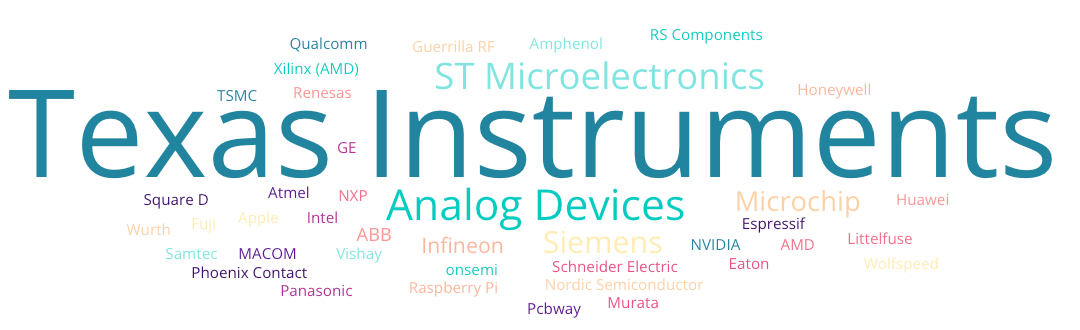
Unaided awareness is harder to earn and harder to measure, but it's far more predictive of purchase behavior. If your brand doesn't come to mind when a buyer is actively looking for a solution, you're not really in the consideration set — no matter how many people could pick your logo out of a lineup.
The Core Method: Brand Recall Surveys
The most reliable way to measure unaided awareness is through structured brand recall surveys. The mechanics are straightforward, but the details matter.
The question format: Open-ended, unprompted. Something like:
"When you think of [product category], what companies come to mind?"
Follow-up: "Any others?"
That follow-up matters more than most marketers realize. First mentions (top-of-mind awareness) are gold — they represent the brand that fires first. But the follow-up captures the broader consideration set, which is equally useful for competitive benchmarking.
What to measure:
- Top-of-mind awareness (TOMA): The brand mentioned first, most often
- Total unaided awareness: All brands mentioned across the full sample
- Share of mind: Your brand's mentions as a percentage of all brand mentions in the category
Who to survey: This is where B2B adds complexity. You need respondents who are actual buyers or influencers in your category — not a general consumer panel. Options include your own opt-in research database, a panel provider with B2B targeting capabilities, or a trade media partner with verified audience access (hint hint: All About Circuits). Resist the temptation to survey only your existing customers. That's a biased sample that will overstate your awareness.
Sample size: For B2B, statistically significant results typically require 200–400 respondents per segment, depending on the specificity of your audience. Niche categories may require more creative sampling strategies.
Running Awareness Studies: Cadence and Consistency
A single awareness study gives you a snapshot. To make it useful, you need a benchmark — and then you need to track against it.
Most B2B organizations run brand awareness surveys annually or bi-annually. If you're in the middle of a major campaign, product launch, or rebrand, consider a pre/post design: survey before the campaign launches, then again 60–90 days after it ends. The delta is your impact measurement.
A few consistency rules that get violated more often than they should:
- Use the exact same question wording every time. Even small phrasing changes can shift results.
- Survey the same audience definition across waves. If your ICP evolves, document it — don't silently change who you're sampling.
- Run surveys at the same time of year when possible to control for seasonal factors.
Supporting Methods: Beyond the Survey
Surveys are the backbone, but they don't tell the whole story. These supporting signals can add texture to your awareness picture.
Search volume data: Branded search volume — how often people search your company name directly — is a proxy for unaided awareness in action. Track this in Google Search Console or SEMrush over time. A rising branded search trend typically correlates with growing awareness. A flat line after a major campaign is a signal worth investigating.
Social listening: Tools like Brandwatch, Mention, or Sprout Social can track unprompted brand mentions across social platforms and forums. This isn't a replacement for survey data, but it captures organic conversation that surveys miss.
Share of voice: In B2B, this is often tracked through PR and content metrics — how often your brand appears in industry publications, analyst reports, or search results for category terms relative to competitors. It's an indirect awareness signal but a useful one.
Dark social and direct traffic: Dark social refers to sharing that happens in private, untrackable channels — Slack workspaces, Teams threads, WhatsApp groups, direct emails. When someone pastes your URL into a private message and a colleague clicks it, that visit shows up in your analytics as direct traffic with no referral source attached. For B2B marketers, this is especially significant because professional sharing often happens in exactly these kinds of closed environments. A spike in direct traffic after a campaign is frequently dark social at work. It doesn't tell you how they became aware, but it confirms the awareness is there and spreading.
Tools Worth Knowing
You don't need an enterprise research budget to run a meaningful awareness study. Here's a practical toolkit by tier:
DIY / lower budget:
- SurveyMonkey Audience or Pollfish — panel access with some B2B targeting options
- Google Forms + LinkedIn outreach — works for tight-knit communities where you have audience access
- Google Search Console — free branded search tracking
Mid-tier:
- Cint — more robust B2B panel options with better targeting precision (formerly Lucid)
- Semrush / Ahrefs — branded keyword tracking and share of voice reporting
- Brandwatch or Mention — social listening
Full-service research:
- Ipsos, Kantar, or Qualtrics — enterprise-grade brand tracking studies with statistical rigor and longitudinal tracking built in. Higher investment, but appropriate for large campaigns or ongoing brand health measurement.
- EETech — of course we have to mention that EETech has access to millions of engineers and a full service custom research program. We run these types of studies constantly (for your competitors).
What to Do With the Data
Measuring unaided awareness is only useful if it informs decisions. Once you have your baseline, the data should answer a few key questions:
- Are we in the consideration set at all? If your brand isn't surfacing in unaided responses, no amount of conversion rate optimization is going to fix a top-of-funnel problem.
- Where do we rank vs. competitors? Share of mind benchmarks give context. Being third in a crowded category may be perfectly healthy — or it may signal a gap, depending on your goals.
- Is our awareness growing? Tracking across time is how you connect brand investment to outcomes and make the case for continued budget.
Unaided awareness isn't the most glamorous metric in a marketer's dashboard. It's slow-moving, expensive to measure rigorously, and hard to tie to a single campaign. But it's one of the most honest signals you have about whether your brand is actually earning a place in buyers' minds — before they ever fill out a form.
That's worth measuring.
Looking for more data-driven marketing insights? Subscribe to our monthly newsletter for research, strategy, and practical tools for B2B marketers.
Related articles






Annual Industry Research
Research backed strategy is the key to success. For years, our insights have shaped the industry’s understanding of an evolving customer base. Whether you're targeting the broader electronics industry or specific market segments, our Annual Industry Research provides the comprehensive data and insights you need to make informed strategic decisions.
Don’t worry. We hate spam, too. Sign up for our quarterly newsletter packed with market updates and research insights.
.webp)